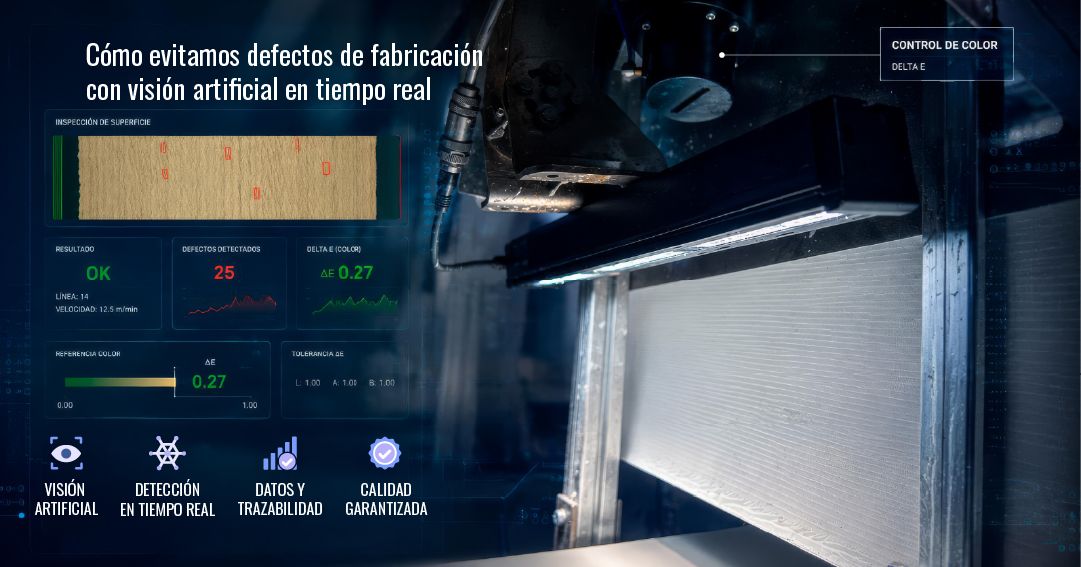
Within our artificial vision system, we have two key control points that enable precise defect prevention. On one hand, a camera monitors the product’s color, ensuring there are no deviations from the defined standard using Delta E, which guarantees color consistency. On the other hand, a second camera located at the bottom of the line controls the correct application of primer on the edge, detecting any irregularities that could affect adhesion or the final finish. This dual inspection system allows us to correct manufacturing defects in real time and ensure consistent product quality.
Unlike traditional inspection systems, which rely heavily on manual checks or sampling, artificial vision operates continuously and automatically. This allows us to correct manufacturing defects faster and more efficiently, reducing variability and improving the consistency of the final product.
Currently, in the extrusion area, artificial vision implementation has reached 85%. This progress is helping us reduce waste, minimize rework, and lower the number of customer-reported issues. Although we are still in the adjustment phase, initial results confirm the strong potential of this technology.
One of the key advantages of artificial vision is its ability to generate objective data about product quality. This data not only supports real-time decision-making but also allows us to analyze trends, identify recurring issues, and drive continuous improvement.
Additionally, these systems strengthen key aspects such as quality control and traceability, indirectly supporting compliance with industrial standards and certifications. The digitalization of visual inspection represents a major step toward a more efficient, precise, and quality-driven manufacturing environment.
At Protecnic, we have already achieved an important milestone: real-time detection of manufacturing defects in our extrusion lines. In the coming months, we aim to consolidate data and accurately measure improvements in KPIs such as waste reduction, incident rates, and process efficiency.
We continue moving forward with a clear objective: leveraging technology to prevent manufacturing defects, optimize processes, and deliver the highest product quality.